
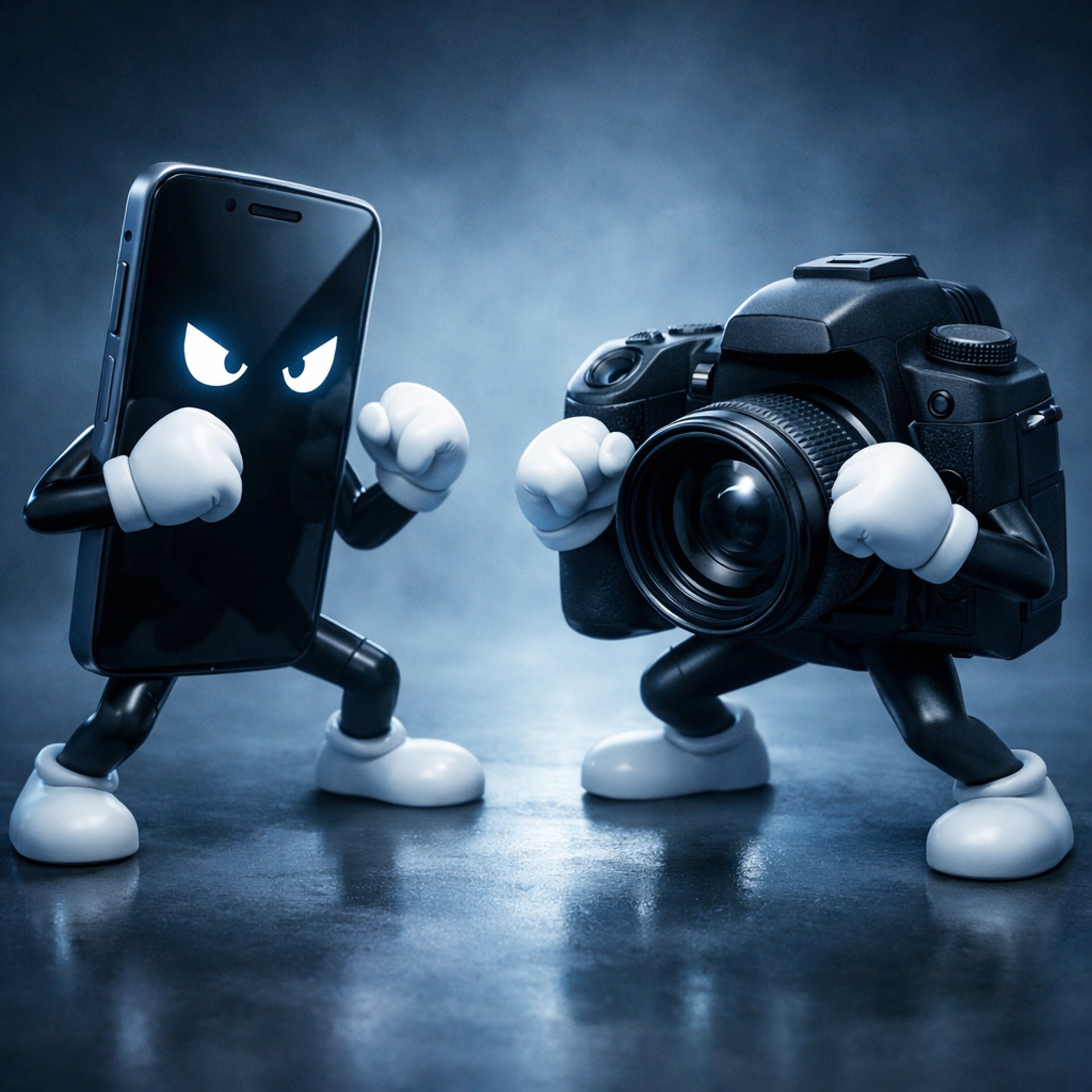
Smartphone vs Camera: Which Should You Start With?
Choosing between a smartphone or a camera to start in photography and video can be tricky. Discover pros, cons, and practical tips to decide which suits beginners best.
Alberto Cano
2/6/2026
This day will be remembered as one of the grea… nah, I’m just kidding. What really matters is the question many beginners ask: should I buy a camera, or is my smartphone good enough?
I’m not here to give the one and only truth—this is just my opinion based on experience. And honestly, the answer is…
it depends.
Sounds a bit unclear, right? Don’t worry. Let’s start by looking at the pros and cons of each option.
SMARTPHONES
Phones change a lot depending on the brand, the quality, and if they’re premium or not. But overall, we can sum up the main features of smartphones like this.
ADVANTAGES
• First, they’re generally more affordable compared to dedicated cameras.
• They face fewer restrictions in places like museums or concerts, where professional gear might be limited.
• Their portability is unmatched—you always have your phone with you.
• Since most devices run on iOS or Android, switching brands rarely requires a steep learning curve.
• And with apps such as VN, CapCut, Lightroom, or Snapseed, editing photos and videos can be done instantly, right from your pocket.
DISADVANTAGES
Smaller sensors mean lower photo quality compared to dedicated cameras.
Manual controls are limited. Even with Pro Mode or apps, it’s not the same as a professional setup.
Low‑light shots can look good, but taking several in a row is slow because the phone processes each one separately.
Battery drains fast, especially with 4K video. Unlike cameras where you swap batteries, with a phone you have to wait for it to recharge.
People may see it as less professional. Even if the results are good, some won’t take you seriously if you’re filming with a phone instead of a camera
Alright, now let’s talk about cameras. From the points we just saw, it might seem like cameras easily “beat” smartphones. But don’t be too sure—you might be surprised by what comes next.
CAMERAS
Cameras change a lot depending on the brand, the quality, and if they’re premium or not. But overall, we can sum up the main features of cameras like this.
ADVANTAGES
Superior image quality: larger sensors (APS‑C or Full Frame) capture more light and detail.
Interchangeable optics: ability to use different lenses for specific styles (portraits, landscapes, macro, product, etc.).
Full manual control: exposure, focus, white balance, and color profiles.
Low‑light performance: less noise and better dynamic range in dark conditions.
Durability and ergonomics: bodies designed for intensive use, with better grip and resistance.
DISADVANTAGES
High cost: body + lenses + accessories can easily exceed the budget of a smartphone.
Learning curve: requires technical knowledge to fully exploit its potential.
Volume and weight: less practical to carry everywhere.
Slower workflow: you need to transfer, edit, and then publish.
Dependence on accessories: extra batteries, SD cards, lenses, stabilizers.
So, what’s better? Honestly… it depends.
Sorry for giving the same answer again, but here’s the deal: if you want sports or nature photos o videos, go with a camera. If you want portraits, most phones already have portrait modes that give a nice bokeh effect. And if you want to learn how the exposure triangle really works, a camera is the way to go.
The key isn’t just knowing the theory—it’s practicing, making mistakes, and learning how to solve them as soon as possible.
There isn’t a definitive winner here. However, if the context is beginning in photography or video, the smartphone is the most practical choice. It’s already in our hands, and using natural light can make a big difference, giving us a strong starting point without extra investment.
Tips and tutorials for aspiring creators.
© 2025. All rights reserved.


TAGS: