

How to Be Cinematix in a Modern Life
Cinematix shows how to be a titan of storytelling in a sea of fleeting content, proving that memorable creation blends depth, humor, and human connection.
Alberto Cano
2/13/2026
I’ve thought a lot about how to approach this article, precisely to do justice to this titan of storytelling.
First, what do we understand by storytelling? It is the art of telling stories to convey a message, connect emotionally with the audience, and make a narrative memorable.
And what does memorable mean? According to the RAE, it is something “worthy of memory,” but I don’t think that definition does it justice. I believe it means leaving an indelible mark on our memory—something distinguished by its emotional impact, its meaning, or its uniqueness.
Cinematix emerged in 2018 as a channel created by its founder, Santiago, who, according to his description, says: “I like to write essays and fiction.” If you have the chance to listen to him and understand what he says in Spanish, I highly recommend it. Because although there is technology where AI can translate his words, that particular tone in pronouncing certain words—or even injecting his comic touch into what he narrates—is something that, for now, AI cannot faithfully reproduce.
CHAPTER ONE: HADES
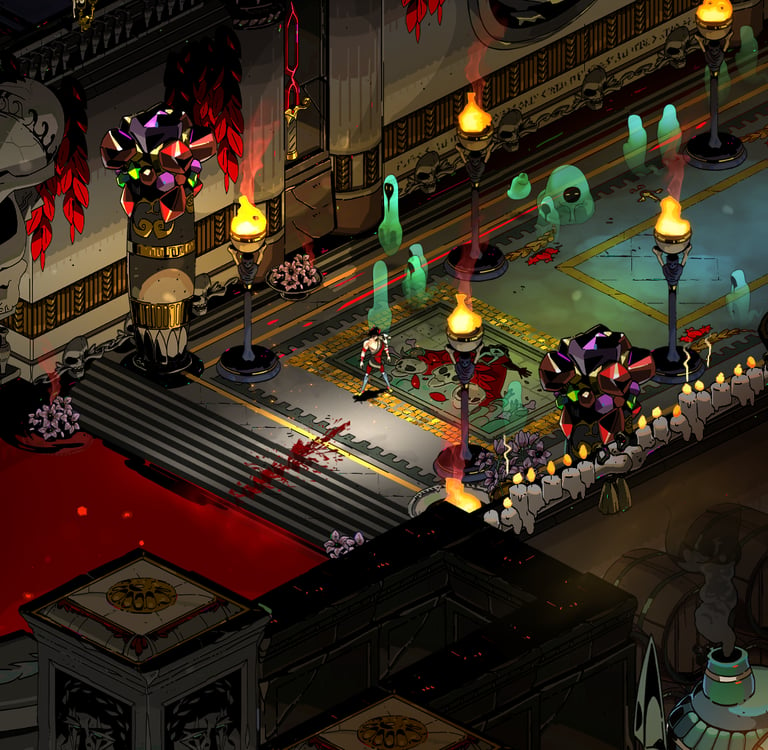
In the Underworld of Hades, a game published by Supergiant Games in 2020, nothing is permanent except change. Zagreus, is trapped in an eternal cycle of death and rebirth. In this context, what is memorable does not manifest as a static statue or a completed feat, but as the accumulation of scars, dialogues, and small advances.
In most stories, failure is something to be forgotten. In Hades, failure is the indispensable requirement to be remembered. Each time Zagreus “dies” and emerges from the Blood of Styx, the world around him has changed. The characters in the House of Hades—from the bitter Hypnos to the imposing Father—remember your fall.
What is memorable here is the game’s ability to acknowledge your effort: a conversation about how you were defeated by a hydra, or a sarcastic remark about your lack of care. Memory is not a trophy in a showcase, but a living fabric of interactions that validate your existence despite your defeats.
Throughout each escape attempt, the gods of Olympus grant us their power. These blessings are powerful, dazzling, and transform Zagreus into a force of nature. However, they are fleeting: upon death, they vanish.
This mechanic teaches us a vital lesson about what is truly memorable: technical experience and wisdom. Even if you lose Zeus’s lightning or Dionysus’s hangover, you retain the knowledge of how to use them. What is memorable is the cognitive imprint left on the player; not the temporary power, but the mastery acquired in the process.
What makes Hades genuinely memorable for the player is not only its frenetic combat, but the building of relationships. In a place designed for eternal punishment, acts of kindness—such as gifting nectar, listening to Orpheus’s sorrows, or petting Cerberus—become the milestones of the narrative.
The artistic direction and Darren Korb’s soundtrack create an atmosphere that lingers in the player’s memory. The intense colors, stylized strokes, and epic melodies turn each run into a sensory experience that is hard to forget. What is memorable here is the aesthetic imprint left in the mind.
The game suggests that we are memorable because of our capacity to affect others. Zagreus does not change the order of the world (the Underworld continues to exist), but he changes the atmosphere of his home. What is memorable is the emotional impact you leave on the people (or shades) with whom you share your time, whether in Tartarus or in the Elysian Fields.
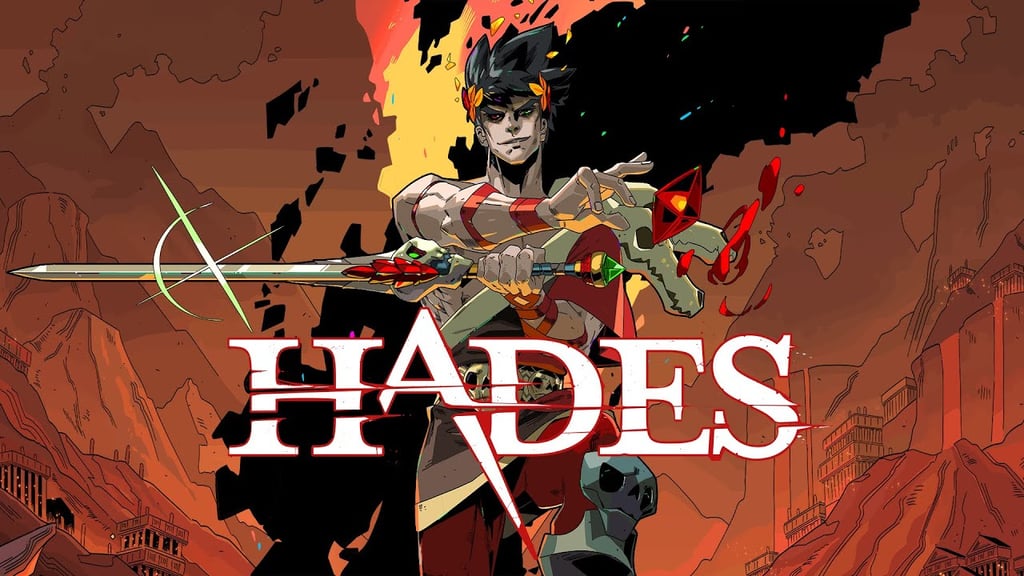
In Hades, memorable is a verb, not a noun. It is the act of rising once more, of learning a new technique, and of deepening a bond. It teaches us that life (or life after death) is not about reaching the summit, but about how worthy and resilient you become while trying to climb it.

Hades - Official Gameplay Reveal Trailer | The Game Awards 2018
Hades by Supergiant Games
CHAPTER TWO: READY PLAYER ONE
If in Hades the memorable is born from repetition with awareness, in Ready Player One, a film directed by Steven Spielberg in 2018, the memorable arises from the opposite conflict: the temptation to replace experience with its simulacrum.
The OASIS is the space where everything can be epic, immediate, and perfect. Each user can rewrite their identity, escape their body, erase mistakes with a reset. But this abundance of possibilities reveals a paradox: when everything can be memorable, nothing truly is. Memory needs friction, limits, loss. Without risk, there is no imprint.
Wade Watts begins his journey believing that what is memorable lies in mastering the system, in knowing every reference, in winning the game. His obsession is archival: memorizing clues, dates, songs, video games. But this memory is not yet meaningful—it is only accumulation. As in Hades, Wade repeats; but unlike Zagreus, at first he repeats without transformation.
The turning point comes when he understands that Halliday did not design the OASIS to be conquered, but to be understood. The creator was not seeking champions, but interpreters. The true message is not in the keys, but in regret: Halliday remembers too late that he lived more in the simulation than in the real world. His legacy is not the OASIS, but his warning.
Here Ready Player One becomes a philosophical threshold between Hades and Stoicism.
Zagreus learns that repeating without reflection is empty.
Wade learns that remembering without living is hollow.
The OASIS promises infinite life; the real world, on the other hand, offers something more valuable: finitude. And it is precisely that finitude that makes something memorable. Only what can be lost can be remembered with weight.
From this perspective, Ready Player One is not a fantasy about the future, but a parable about the present: when we externalize our memory into systems, achievements, and avatars, we risk forgetting the essential—that experience is not validated by its spectacle, but by its coherence with who we are.
Thus, the film pushes us toward the same conclusion that Stoicism will articulate with greater precision:
the memorable is not that which escapes pain, but that which teaches us to respond with virtue.
Ready Player One leaves us at the threshold of that ethic: after so many virtual lives, Wade chooses a single real life. Not because it is perfect, but because it is his. And in that choice begins the path toward wisdom that How to Be a Stoic will put into words:




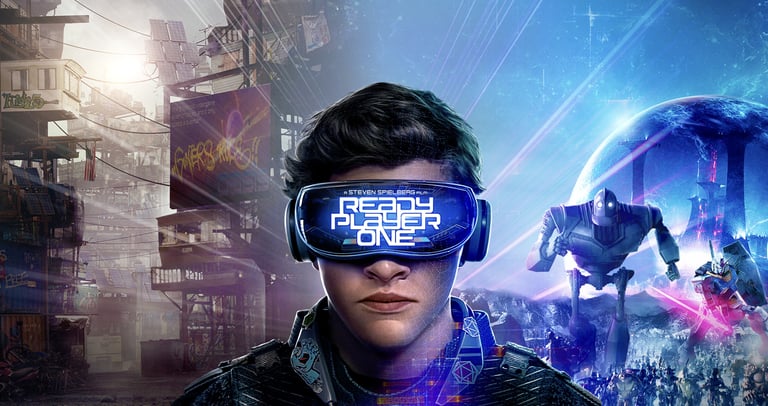

that the only truly memorable thing is that which transforms our character, not our appearance.
Warner Bros.
Anorak, the OASIS’s creator’s avatar — Warner Bros.
Artist: RedJohn9923
CHAPTER THREE: HOW TO BE A STOIC
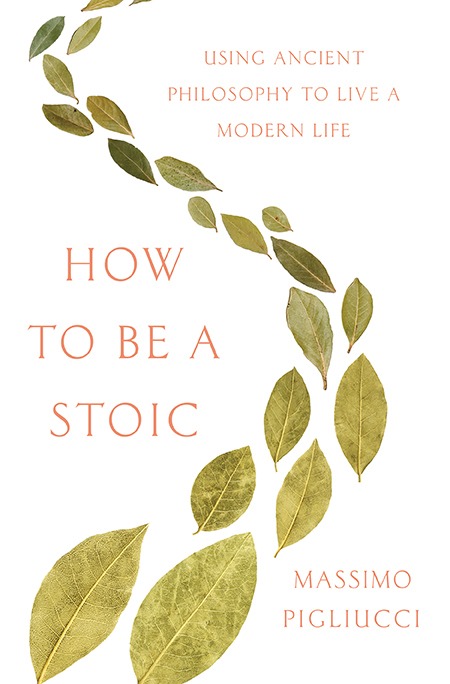
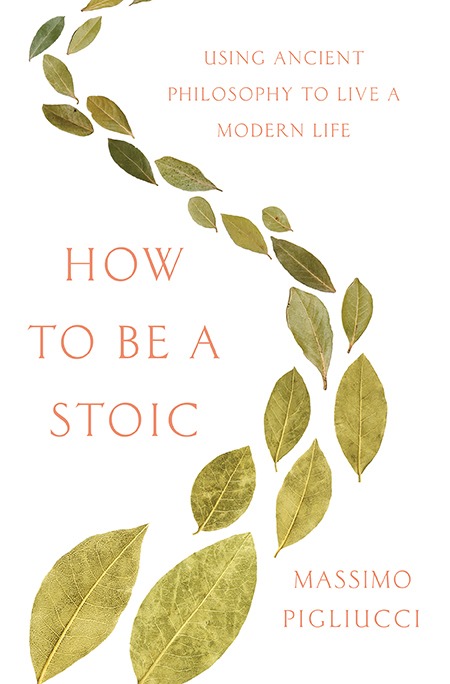
In contemporary culture, the word “memorable” is often synonymous with spectacle: an incredible trip, a professional achievement, or a viral image. However, for Massimo Pigliucci, drawing on the teachings of Epictetus, Marcus Aurelius, and Seneca, life is not measured by the impact we cause on others (something beyond our control), but by the coherence of our actions with virtue.
Pigliucci’s starting point is the “dichotomy of control.” If we try to be memorable by seeking external approval or historical legacy, we place our happiness in the hands of fortune. For a Stoic, what truly makes a life worthy of being remembered—at least by oneself and by the cosmos—is the use of reason to act with justice and courage in the present.
An action is memorable not because it is applauded, but because it was the right decision under pressure. Pigliucci argues that the “art of living” consists in turning each everyday moment into an exercise of excellence.
Pigliucci uses the metaphor of theater (much loved by Epictetus): we do not choose the role we are assigned, but we do choose how we perform it. A “memorable” performance in the theater of life is one in which the individual remains faithful to their principles, even when no one is watching. The deepest mark we leave is the example of integrity. In this sense, the memorable becomes introspective: it is the peace of conscience at the end of the day.


The practice of memento mori (remembering death), which Pigliucci analyzes, serves as a filter for what is memorable. If we are aware of our finitude, we stop chasing trivialities and focus on what truly transcends: our relationships, our contribution to the common good, and our mental strength. What survives of us is not our image, but the echo of our virtue in those who surrounded us.
To ground these concepts in modern narrative, we can observe how the struggle for transcendence and character manifests in other media:
Ready Player One: The Legacy of James Halliday
In Steven Spielberg’s film, James Halliday creates the OASIS in search of a form of digital immortality. However, his real life was lonely and full of regrets for not having acted with courage in his personal relationships.
The Stoic connection is clear: Halliday is remembered for his creation (an “indifferent” in Stoic terms), but the protagonist, Wade Watts, discovers that what is truly memorable and valuable is not the Easter egg nor the power over the simulacrum, but human connection in the real world. As Pigliucci would say, reality is the only place where true virtue can be practiced; the virtual is only an echo.
Hades: The Training of the Prokopton
In the video game Hades, the protagonist Zagreus repeatedly attempts to escape the underworld. Each failed attempt ends in death and a return to the beginning. This structure perfectly reflects the Stoic idea of the prokopton (the one who progresses).
Zagreus does not grow frustrated by failure (an external event), but instead uses each “death” to learn, improve his technique, and strengthen his bonds with the gods and inhabitants of Hades. What is memorable in this game is not only the final success of escape, but the unwavering persistence and the growth of character through the eternal cycle of struggle. It is the Stoic practice of turning the obstacle into the path.
To be memorable is not a goal to be pursued, but a natural consequence of living with purpose.
Photo by cottonbro studio
In a world saturated with instant gratification, where everything seems to need to be resolved or consumed in less than 30 seconds, the word “memorable” has acquired an almost revolutionary weight. As a photographer and filmmaker, my perspective has been shaped by a constant search for that “something” that transcends a simple glance. Along this path, the philosophy of Massimo Pigliucci and the content of Cinematix have been essential compasses to understand that what is memorable is not an accident, but a construction of character and narrative.
Writing with depth is not always easy, especially when one prefers frankness and direct impact. However, I've noticed that consuming Cinematix’s videos is like returning to the Blood of Styx in Hades. Just as Zagreus emerges from the river time and again, each video greets you with a surprise: the ability to connect an apparently isolated theme with a universal topic. In Supergiant Games’ title, what is memorable is persistence; in content creation, it is the ability to link an indie game with a classic book and, in turn, with a film. That interconnection teaches us that, at its core, everything is bound together by invisible threads of meaning.
From Pigliucci’s perspective in How to Be a Stoic, virtue lies in functional excellence. For me, Cinematix is one of the titans of modern storytelling precisely because it achieves that excellence. Amid an ocean of ephemeral content, he invites you to pause and pay attention.
But don’t be mistaken: this is not a heavy or solemn philosophy lesson. Just as James Halliday in Ready Player One left clues filled with nostalgia and humanity within his simulacrum, Cinematix drops sparks of humor in the midst of his reflections. That with breaks the solemnity and reminds us that laughter is also a form of memory. As Stoicism teaches, rational joy is part of a life well lived.
The Creator’s Dichotomy
I relate my craft to this triad of influences in the following way:
Stoic Control: Just as Pigliucci suggests focusing on what depends on us, as a filmmaker and photographer I focus on the intention behind each frame and photo.
The Repetition of Hades: I understand that technical mastery is born from “failed attempts” and from starting over with greater wisdom.
The Reality of Wade Watts: In the end, as in Ready Player One, I know that equipment or effects are secondary; what truly matters is human connection and the truth we capture.
What you will find in this way of seeing the world—and in channels like Cinematix—is proof that one can be profound without being boring. What is memorable is that which survives the endless scroll because it has soul.
At the end of the day, being a prokopton (someone who progresses) in cinema or photography means understanding that every story we tell is another thread in this great philosophical tapestry. As humor reminds us amid reflection: we are not only creating images, we are building the memory of what it means to be alive.
Below I leave you some of his videos, and if you’ve made it this far, I hope you’re ready to return to the Blood of Styx in next week’s article.



Nice Alberto, but what does all this have to do with Cinematix?
CONCLUSION
Supergiant Games
Wake me up - Cinematixfilms
Hell Let Loose and World War II - Cinematixfilms


Santiago - Founder of Cinematixfilms
I like to write essays and fiction. Welcome.

Tips and tutorials for aspiring creators.
© 2025. All rights reserved.


TAGS: